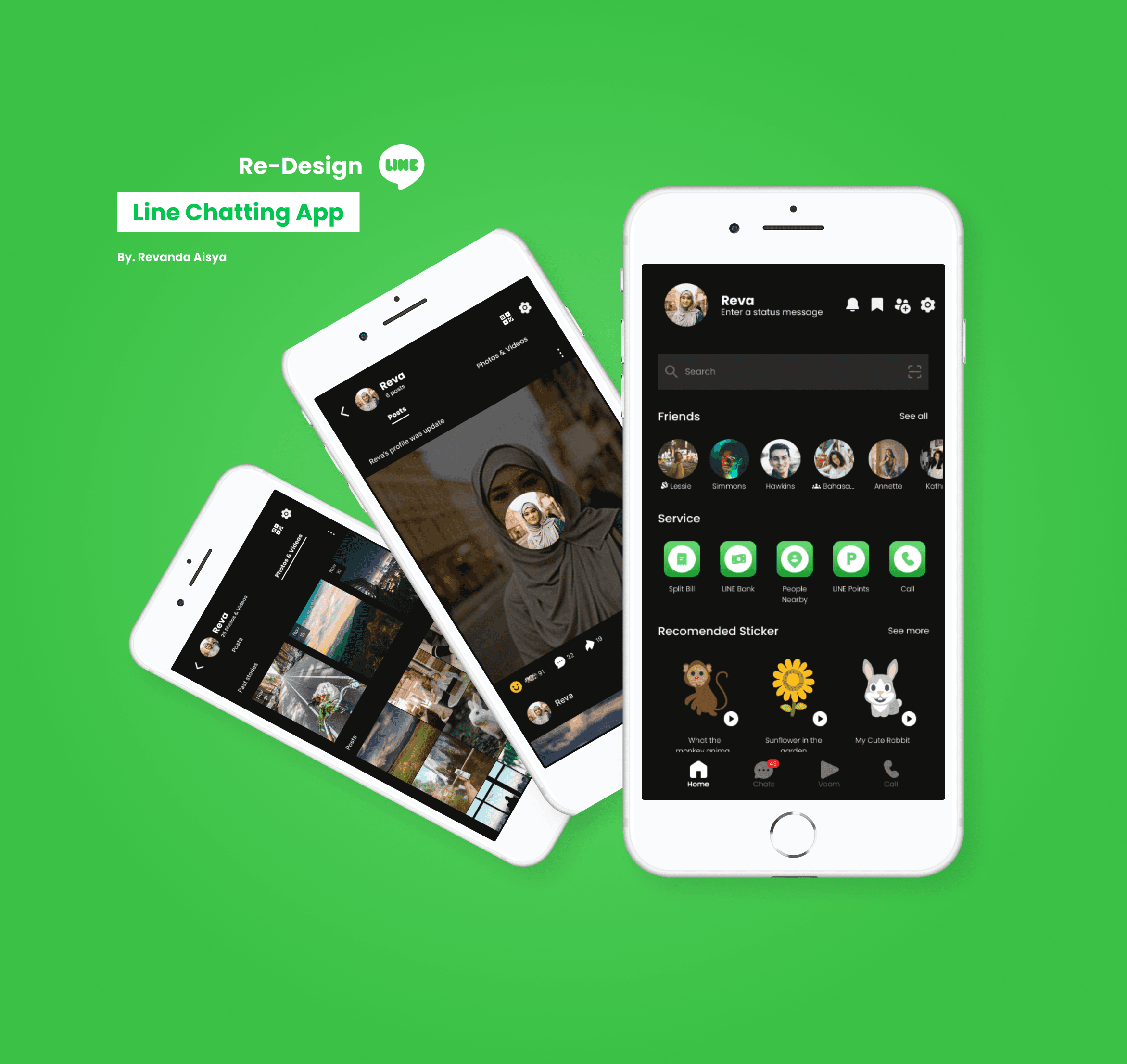
Case Study: Re - Design LINE Chatting App
Background
LINE is a popular messaging application that combines messaging, social networking, and multimedia sharing features. Despite its widespread use, some users face challenges in navigation and engagement within certain features like Profile, Chat, and Voom. The goal of this redesign is to enhance user experience and streamline functionality.
Objectives
Improve the usability of the Profile, Chat, and Voom features.
Increase user engagement and interaction within these features.
Create a visually appealing and intuitive interface.
Methodology
I employed the Design Thinking approach, consisting of five phases:
1. Empathize
User Interviews: Conduct interviews with users to understand their experiences using the Profile, Chat, and Voom features.
Observations: Observe how users interact with the app, noting difficulties and frustrations they encounter.
Personas: Develop user personas based on interviews to understand their needs and goals.
2. Define
Identifying Problems: Identify the main issues users face, such as navigation difficulties, confusion regarding privacy settings in Profile, and low engagement in Voom.
Problem Statement: Formulate a clear problem statement, e.g., “Users struggle to find and manage information in the Profile feature, which reduces their satisfaction with the app.”
3. Ideate
Brainstorming Solutions: Hold brainstorming sessions to generate new ideas for enhancing these features.
Mapping Ideas: Organize generated ideas into a concept map to explore relationships among features.
4. Prototype
Creating Prototypes: Use design tools to create interactive prototypes of the improved features, including Profile, Chat, and Voom.
Focusing on Interactivity: Integrate interactive elements and animations to enhance user experience.
5. Test
Prototype Testing: Invite a group of users to test the prototypes and observe their interactions.
Feedback Collection: Gather qualitative feedback on design and functionality of the features.
Analysis: Analyze test results to identify areas needing further improvement.
Key Features Redesigned
Profile:
Enhanced Layout: A cleaner, more organized layout that clearly displays user information.
Customization Options: Improved settings for users to customize their profile and privacy options.
Quick Access: Provide shortcuts to frequently used settings and features, enhancing usability.
Chat:
Simplified Interface: A streamlined chat interface with better message grouping for easier navigation.
Rich Media Integration: Simplified attachment options for sharing images, videos, and documents.
Chat Management: Better tools for archiving and managing chats, allowing users to easily clean up their chat list.
Voom:
Dynamic Content Display: A more engaging layout for Voom, showcasing popular content and user-generated videos.
Interactive Features: Enhanced interaction options, including reactions, comments, and sharing capabilities.
Personalized Feed: Introduce a content feed personalized based on user interests and interactions.
Outcomes
Improved User Experience: User testing showed significant increases in satisfaction, particularly in ease of navigation and engagement.
Increased Engagement: The redesigned Voom feature saw higher user interaction, with users spending more time watching and sharing videos.
Positive Feedback on Aesthetics: Users appreciated the visual design and layout changes, noting that the app felt more modern and intuitive.
Conclusion
The redesign of the LINE app focusing on the Profile, Chat, and Voom features successfully addressed user issues while enhancing overall usability. By adopting a Design Thinking approach, I was able to design, test, and refine solutions based on user feedback. This case study highlights the importance of user-centered design and iterative processes in creating more engaging and effective applications.